
What Makes An Affordable City? Tax Hikes, Reserve Depletion, and Higher Taxes
Contributors: Arufha Malek, Mason Elford, Anish Jairath and Colby Schneider

Jamie Hill (left) and Jared Andreasen (right) at the Bandt Centre, Regina, SK. August 1st, 2023. Photo provided by: Jamie Hill.
After living in Regina for two years, Jamie Hill decided to move back to Carlyle. He says the rising cost of living in the city forced his decision.
“No, it's [Regina] definitely not for me and for any young person. I don't think it's feasible any longer,“ said Hill.
Hill doesn’t deem Regina appropriate for raising a family.
There are multiple factors behind this sudden rise in the cost of living. One is increasing tax hikes.
The 2026-27 provincial budget saw the biggest tax hike in Regina's history.
The following graph is a comparison between Regina’s and Saskatoon’s mill rates and utility rates from 2015 to 2026.
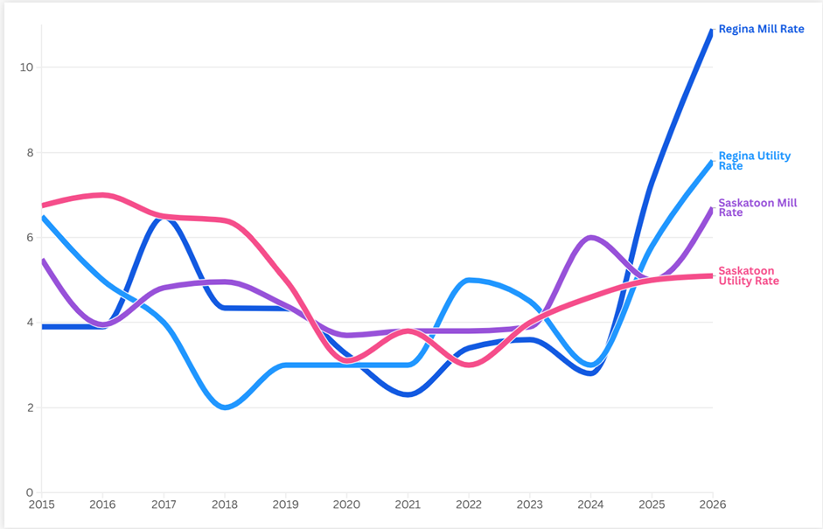
Fig. 1. Regina vs Saskatoon mill/utility rate percentage increase yearly.
Graph made by: Mason Elford using Flourish
City officials justify the tax hike saying the previous administration kept taxes ‘artificially’ low by burning through the city’s reserve funds. As seen in the graph above, Regina's mill rate increases were kept lower than Saskatoon during Sandra Masters’ mayoral term.
“Council approved during budget time some dedicated mill rates to put some money back into reserves,” said Daren Anderson, former Deputy City Manager and CFO of Regina.
The interview with Anderson for this article was conducted on March 11, 2026. Recently, Anderson resigned after 16 months in his role.
The general reserve fund balance in 2020 was $64 million and was expected to increase to $72 million by 2024 as per the 2020 City of Regina budget.
According to a report from the Audit and Finance committee of Regina, the total reserve balance forecasted for Dec 31, 2025, was approximately $141 million and is expected to decrease to $63 million by 2029.
Andrew Stevens, who was Regina’s city councillor from 2016 to 2024 and is also a professor at the University of Regina (U of R), explained the reasons behind heavy draws from reserve funds in the past decade.
“In my 2nd term, 2020 to 2024, there were a number of cases where reserve funds were drawn out of certain reserves and transferred somewhere else where they might have been needed, or in some cases, they were used to help fill budget deficits,” said Stevens.
In 2023, the city projected a deficit of $1.6 million and planned to use the general reserve fund to cover the difference.
Like Anderson, Stevens also blamed the previous administrations for drawing money from the reserves instead of increasing taxes.
“That's a pretty foolish approach,” said Stevens. “Between 2010 and 2012, under then mayor Pat Fiacco, the city's approach based on his leadership was to freeze taxes for the most part [and] draw from those reserves, kick the can down the road and don't save appropriately. We had to make up for that.”
Regina residents seem to agree with Stevens when it comes to old administrations.
Stevens also praised previous administrations from cities like Saskatoon.
“The reason Regina's mill rate was higher than a lot of other cities is because in the past, cities like Saskatoon spent when we skimped, and so their mill rate could be lower for a few reasons, one of which is, they plan for the future much better for political reasons,” said Stevens.
Stevens also said the City used reserve funds during the COVID-19 period because the administration from 2012 to 2016 had increased taxes to accumulate the reserves emptied by the previous administration.
“During the pandemic, the reserves were a lifeline, and without them, there were a number of things that just wouldn't have happened, or we would have had to increase taxes even more,” said Stevens. “Without those reserves, we would have been in a serious bind, had they not been accumulated in the past.”
The pandemic had rampant effects on the city’s budget, which are still being felt today.
“That COVID period, the hardest part for the city to adjust to is inflation,” said Anderson.
Anderson said it’s hard to predict certain city expenses, like snowfall or water main breaks. Experienced staff can usually estimate these costs well, but the recent level of inflation has made it much more difficult.
“You're trying to push those costs in as best you can while also having this expectation that taxes need to remain, quote unquote, low,” said Anderson.
Spending prioritization is also another factor to consider.
“We have tried to keep taxes as low as possible by only spending money on what we need to spend money on,” said Anderson. “We need to push snow, we need to fill potholes, we need to repair broken water mains. We don't necessarily need to replace the roof on a building. Eventually, though, you have to. So, what we've done is delayed a lot of those decisions where you can delay it.”
The following graph compares Regina’s yearly total tax revenue to Saskatoon. It highlights how similar the two cities are, and how Regina’s tax income has noticeably fallen beneath that of Saskatoon’s in recent years.
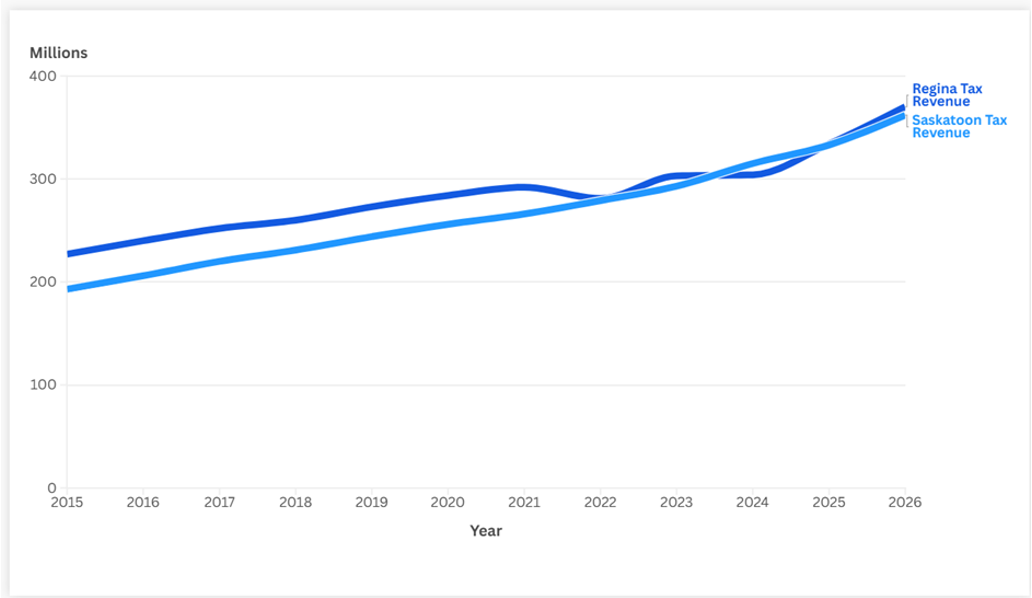
Fig. 2. Regina and Saskatoon total tax revenue yearly. Graph made by: Mason Elford.
In 2021, the council voted to begin the process of building a new aquatic center in the city. This multimillion-dollar project has begun and will now weigh heavily on current city budgets.
Starting as deputy city manager in 2024, Anderson, like current Mayor Chad Bachynski, didn’t have a hand in starting this project. However, they are now burdened with finishing it.
“Chad and I are temporary,” said Anderson. “So, we are brought in and are part of a living organization that is moving forward at all times. We come in and do our part in the time that we're here. So, the fact that decisions were made prior to us getting here is healthy. We have to then take that mantle and make the next best decision.”
The city has budgeted $285.1 million for the new indoor aquatic centre. Stevens mentioned he was among those involved in the decision to build an indoor aquatic centre.
“I'm still in support of it [building an aquatic centre]. I'll be in support of it when it's open, and I was in support of it as soon as I joined [the] council,” said Stevens.
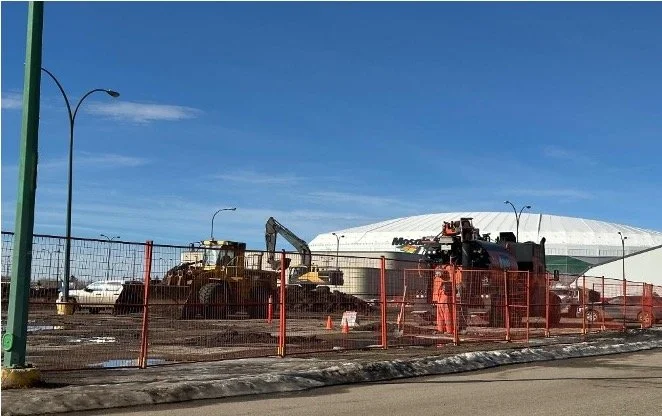
Indoor Aquatics Facility construction site, Regina, SK. March 19, 2026.
Photo by: Colby Schneider.
Stevens added that the Lawson Aquatic Centre needed significant renovations and upgrades as it was built in a time when the population of Regina was much less than it is now.
According to the 2021 census, the population of Regina has grown to 249,217. The last time the city built an indoor pool was in 1991, when the population was 191,692.
When asked why there has been a mixed reaction from the public, Stevens said it is because of “civic politics”.
“But the residents, while they don't like to pay more for things, they love the services,” said Stevens and continued, “People don't want to spend money in Regina. They typically don't like change, but then they'll complain significantly when they don't have the kind of facilities they believe they're entitled to.”
Stevens believes that the pool will generate revenue.
”It will be used for competition by super users, like water polo or competitions,” said Stevens. “But it'll also be used for people that just want a leisure facility infrastructure.”
Some Regina residents do not favour this decision and believe the money used to build the pool should be allocated to places like downtown.
“I think they’re [the city] just misallocating their money,” said Andreasen. “I understand everyone's complaining about the aquatic centre, and I agree, it's pretty outrageous.”
Residents believe that downtown has been lacklustre when it should be a thriving city centre.
“Something Regina has struggled with is keeping some of the mess out of downtown. I think downtown should be a place that's the cleanest and it's what attracts your tourists and people to live there,” said Hill.
When asked about budgeting the money, Anderson, the former city manager, pointed to the city council.
“It's the council's job to set the strategy,” said Anderson. “My job is to give them the right information at the right time so that they can make informed choices.”
While the Anderson acknowledged young people find it challenging to raise a family in Regina or to own property given the current property tax hikes.
And they are think Regina has the highest property tax rate in the province.
In the future, the city had a plan to keep tax hikes smaller than this historic 10.9 per cent mill rate.
“What we can do to keep those taxes low is we can invest in projects that use our existing infrastructure,” said Anderson.
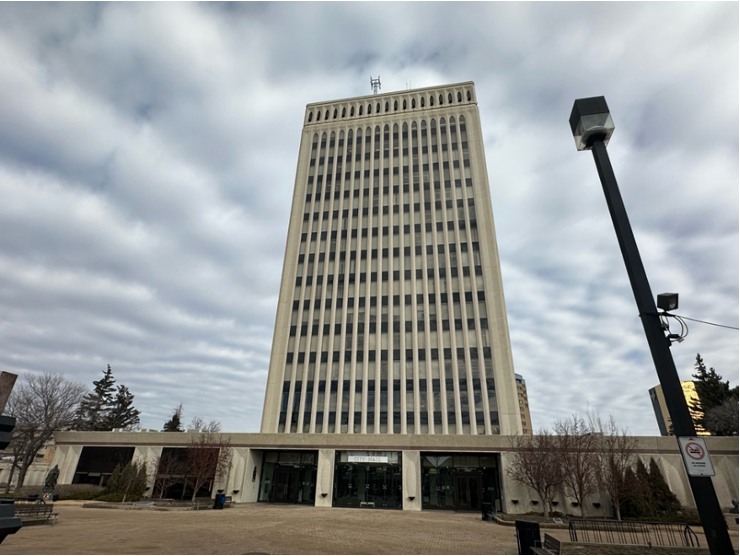
City Hall, Regina, SK. March 20, 2026. Photo by: Colby Schneider.
“If I were this council, you know, not having to deal with the calls and the complaints and the anger. I would have said we're increasing it by 15 per cent,“ said Stevens, who was a city councillor from 2016 to 2024.
“We're going to replenish reserves, and we're going to spend on the projects that keep our city safe,” added Stevens.
The following graph shows Regina’s yearly mill rate percentage increase in comparison to other Saskatchewan cities. This illustrates the scale of how large the 2026 mill rate increase is, as other cities consistently are well below the historical 10.9%.
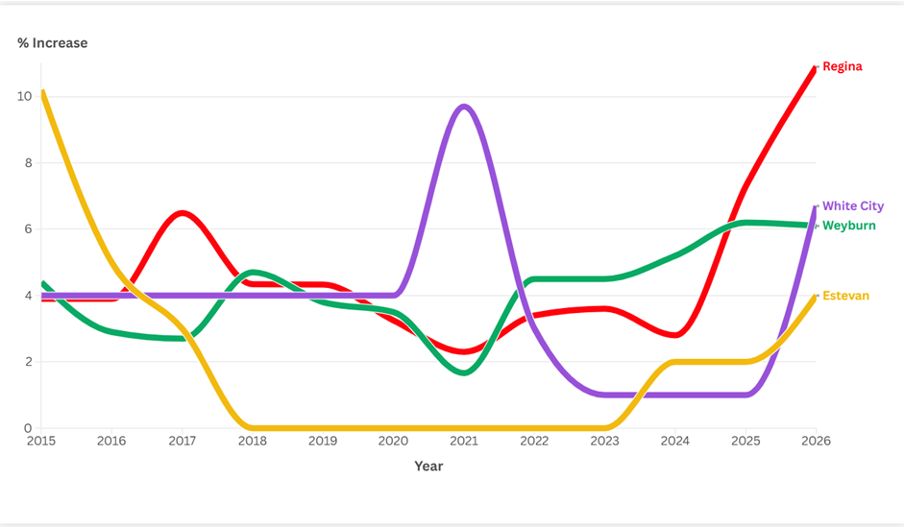
Fig. 3. Yearly mill rate increase by per cent in Regina, White City, Weyburn, and Estevan.
Graph by: Mason Elford.
Anderson says the median household spends about 2.5 to 3 per cent of income on municipal taxes and fees, a level he argues remains affordable for the services provided.
Differing from the residents’ viewpoint, Anderson said, “Regina is, if not the most affordable city in Canada, one of.”
Anderson explained the biggest challenges the administration faces when creating a budget.
“We communicate with the council and mayor. A lot of them are new, and there is an overwhelming amount of information that they need to have in order to make decisions. That is the toughest part,” said Anderson.
Chad Bachynski won the mayoral election in November of 2024. Like his predecessor, Sandra Masters, the mayor oversaw major changes in the city council once he took office.
Overall, seven new council members were sworn in as Bachynski took office. The City Manager, Nikki Anderson, was also terminated in the mayor’s first year.
This mirrors the firing of, at the time, city manager Chris Holden in February of 2022. This firing took place under then-mayor Sandra Masters.
Another addition to this is Anderson's recent resignation from the role of Deputy City Manager and CFO of Regina.
While the city undergoes changes within the management, residents demand that their tax dollars be utilized for cheaper amenities.
Jamie Hill, says he will not be moving back to Regina any time soon. “We could spend our tax money building our province to be cheaper to live in. For any reason like transit … or cost of living, with more buildings, and we can have more amenities.” And until this happens, Hill thinks many more people like him may make the choice to live outside the city.